Stop Iterating Ads, Start Deconstructing Angles: A Scalable Model for Meta Creative Testing
Stop iterating your 'winning' Meta ads until they die. Learn a systematic framework to deconstruct ad angles into hooks, mechanisms, and offers for scalable, predictable creative testing and better ROAS.
Stop Iterating Ads, Start Deconstructing Angles: A Scalable Model for Meta Creative Testing
Iterating on a single “winning” ad is a trap. It produces diminishing returns, leads to creative dead-ends, and burns out your team. A scalable creative strategy doesn't come from polishing one ad until it breaks. It comes from deconstructing the angle that made it work—the core psychological reason it connected with a customer. By systematically testing the independent components of that angle (hook, mechanism, offer), you build an engine for producing entirely new winning ads, not just variations on a theme.
What's wrong with iterating on a 'winning' ad?
Reliance on iterating a single successful ad optimizes you into a corner. You're chasing a local maximum—polishing a tarnished silver dollar when a vein of gold sits untapped a few feet away. This happens because simple iteration, like changing a button color or swapping a background image, fails to address the two primary causes of ad mortality: creative fatigue and platform behavior.
First, your audience grows blind to minor changes. A new headline on the same tired video is still the same tired video. The novelty is gone, and with it, the pattern-interrupt that made the ad work in the first place.
Second, Meta’s algorithm often treats minor iterations as duplicates of the original ad, limiting their reach and learning potential. You're effectively competing with yourself for impressions.
True progress isn't found in these superficial tweaks. Imagine your winning ad features a customer testimonial about solving their back pain. Iteration is changing the font of the subtitles. Deconstruction is asking why that ad worked. Was it the customer’s specific story (hook)? The unique stretching technique shown (mechanism)? The promise of relief in 7 days (offer)? Focusing on iteration keeps you stuck on the font; deconstruction unlocks three new paths to scale.
What is an 'ad angle' anyway?
An ad angle is the core premise of your ad—the specific hypothesis for why a particular customer should buy your product at this exact moment. It's the strategic layer that sits above the copy and creative. A powerful angle is not a single element but a trinity of components working in concert.
1. The Hook: This is the first 3-5 seconds of your ad. It’s the headline, the primary text, the opening video scene, or the most arresting part of your image. Its only job is to stop a distracted thumb mid-scroll by connecting with a prospect's pressing problem, deep desire, or burning curiosity. A good hook earns you the right to their next 15 seconds of attention.
- Example: "This common stretching mistake is making your back pain worse."
2. The Mechanism: This is your unique solution—the “how it works.” It’s the proprietary technology, the secret ingredient, the counter-intuitive process that makes your product uniquely capable of solving the problem introduced by the hook. The mechanism builds belief and answers the prospect’s inherent skepticism of “How is this different from everything else I’ve tried?”
- Example: "…it’s caused by a muscular imbalance our 3-step 'Pelvic Reset' method corrects in minutes a day."
3. The Offer: This is the deal. It is not just your price. The offer is the entire value exchange: the price, discounts, payment terms, premiums, bonuses, guarantees, and elements of urgency or scarcity. It’s the irresistible proposition that makes the decision to act now feel both smart and safe.
- Example: "Get the complete guide and our patented back-roller (usually $49) for just $27, and it’s all protected by our 'Pain-Free or It's Free' 90-day guarantee."
Your winning ad has a specific combination of these three parts. Your next ten winning ads will come from finding new combinations.
How do you deconstruct a winning angle for testing?
This is a methodical, almost scientific process. It transforms creative brainstorming from a chaotic guessing game into a structured exercise. You're not looking for a new ad; you're building an inventory of interchangeable parts.
Step 1: Isolate and Autopsy the Winner Identify a top-performing creative. Look beyond just ROAS. Find an ad with a strong signal—high click-through rate (CTR), low cost per outbound click, strong video hold rates, or a high volume of positive comments. This is your “patient zero.”
Step 2: Document Its Components Open a spreadsheet or a document. Create three columns: Hook, Mechanism, and Offer. Now, surgically extract each component from your winning ad and write it down. Be specific.
- Winning Hook: "This is the exact moment I realized my agency was going to fail."
- Winning Mechanism: "The 'Client Sieve' framework that filters out bad-fit clients before you even speak to them."
- Winning Offer: "Download the free 4-part PDF checklist."
Step 3: Brainstorm Component Variations This is the pivot. Instead of thinking “How can we make this ad better?” you ask, “What are other ways to express this hook/mechanism/offer?” Brainstorm new ideas for each column separately.
- New Hook Ideas:
- "I fired my most profitable client. Here's why."
- "The 3-word email that lands me $10k projects."
- "90% of marketing agencies have this exact same fatal flaw."
- New Mechanism Ideas:
- "A 5-minute Loom video proposal template."
- "My 'Red Flag' onboarding questionnaire."
- "Using a pre-project diagnostic call instead of a free consultation."
- New Offer Ideas:
- "Get the agency growth calculator for $7."
- "Join the 5-day client acquisition challenge."
- "Book a 1:1 'Agency Teardown' session for a limited time."
You just went from having one ad to having the building blocks for dozens of high-potential new ads.
How do you structure a creative test with these components?
Structure eliminates guesswork. The goal is to isolate variables to get clear, actionable data. You'll build a testing campaign designed to answer a single question at a time, like "Which hook gets the most qualified attention?"
The One-Variable Rule Start by testing one component at a time against your control. Your first test should almost always be a hook test, as it has the largest impact on initial performance.
Let’s use the components from the previous example. Your test structure would look like this:
- Ad 1 (Control): [Winning Hook] + [Winning Mechanism] + [Winning Offer]
- Ad 2 (Hook Test A): [New Hook A] + [Winning Mechanism] + [Winning Offer]
- Ad 3 (Hook Test B): [New Hook B] + [Winning Mechanism] + [Winning Offer]
- Ad 4 (Hook Test C): [New Hook C] + [Winning Mechanism] + [Winning Offer]
Notice that the Mechanism and Offer stay identical across all ads. The only variable is the hook (e.g., the first 3 seconds of the video, the headline). This ensures any performance difference is attributable to the hook itself.
Campaign Setup in Meta Ads Manager Keep it simple. Use one campaign. Advantage Campaign Budget (CBO) is ideal here, as you want Meta to quickly allocate spend to the creative that's getting the best initial reaction. Put all your test creatives inside a single ad set targeting your proven broad audience. Don't split the budget across multiple ad sets; you want the ads competing directly against each other on equal footing.
Metrics for Evaluation For a hook test, you are not primarily looking for ROAS. You’re measuring attention. The key performance indicators (KPIs) are leading, not lagging. Look at:
- CTR (Link): Are people interested enough to click?
- Outbound CTR: Are they actually leaving the platform?
- Video Thumbstop Rate (3s Views / Impressions): Are you stopping the scroll?
- Cost Per Outbound Click: Which hook is most efficient at driving traffic?
The hook with the best combination of these metrics becomes your new “winning hook.” You can now use that hook as the new control and run a test on the Mechanism, and then the Offer. This methodical rotation creates a powerful flywheel of continuous improvement.
Doesn't this take more work than just iterating?
Initially, yes. It requires more strategic thinking upfront than simply telling a designer to “make the button red.” But in the long run, it is dramatically more efficient.
Iterating is a rickety ladder leaning against a wall. Eventually, you hit the top and have nowhere else to go. You must find a new wall and start over from scratch. This is what it feels like when your winning ad dies and you have no idea what to do next.
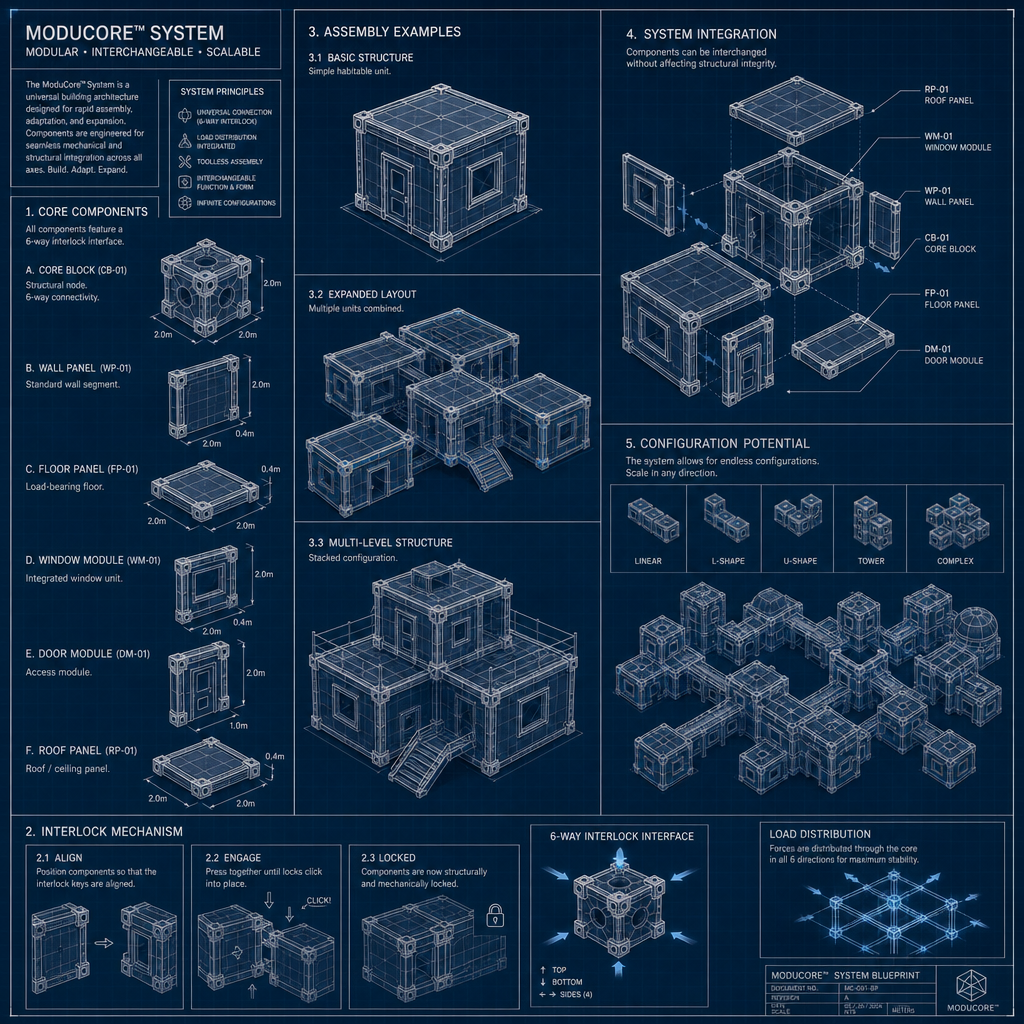
Deconstructing angles builds a system—a creative factory. You're not building a single a ladder; you're manufacturing a set of universal, interlocking parts. When one combination starts to fatigue, you don't panic. you simply go to your component library, assemble a new combination of a proven hook and a proven mechanism with a new offer, and launch a fresh test.
This approach decouples high-level strategy from day-to-day production. A strategist can plan dozens of angle combinations in a single afternoon. A copywriter can write five hook variations in an hour. A video editor can splice new openings onto existing ad bodies. It turns the chaotic art of “coming up with new ads” into a manageable, scalable process.
This is the difference between an amateur who gets lucky with one ad and a professional who has a system for generating profitable ads on demand. Stop polishing. Start building your arsenal.
Frequently asked questions
How much budget do I need for a Meta creative test?
A good rule of thumb is to budget enough for each ad creative to get at least 1,000-2,000 impressions. Alternatively, aim to spend 3-5 times your target CPA per ad creative. This provides enough data to make a statistically sound decision before declaring a winner.
What if my 'winning' ad is old and performance has tanked?
The creative itself may be fatigued, but the core psychological angle that made it work might still be valid. Deconstruct what made it successful in the first place—the hook, mechanism, and offer. Then, test entirely new creative executions (new videos, new images, new copy) that bring that same core angle to life for a modern audience.
How many ad variations should I test at once?
Test 3 to 5 variations in a single test group. This provides enough options to find a clear winner without spreading your budget too thin, which can lead to inconclusive results. Testing more than five at a time often means no single ad gets enough spend to exit the learning phase.
Should I use CBO or ABO for creative testing?
For most tests where you want to find the single best performer, Advantage Campaign Budget (CBO) is superior. It allows Meta's algorithm to quickly allocate budget to the creative that shows the most promise. If you need to force-spend equally on each ad for a pure side-by-side comparison, Ad Set Budgets (ABO) can work, but require more manual monitoring.